200 Hollycrest Drive  |  Pinehurst, NC  |  Est. 1916
Garran Hill
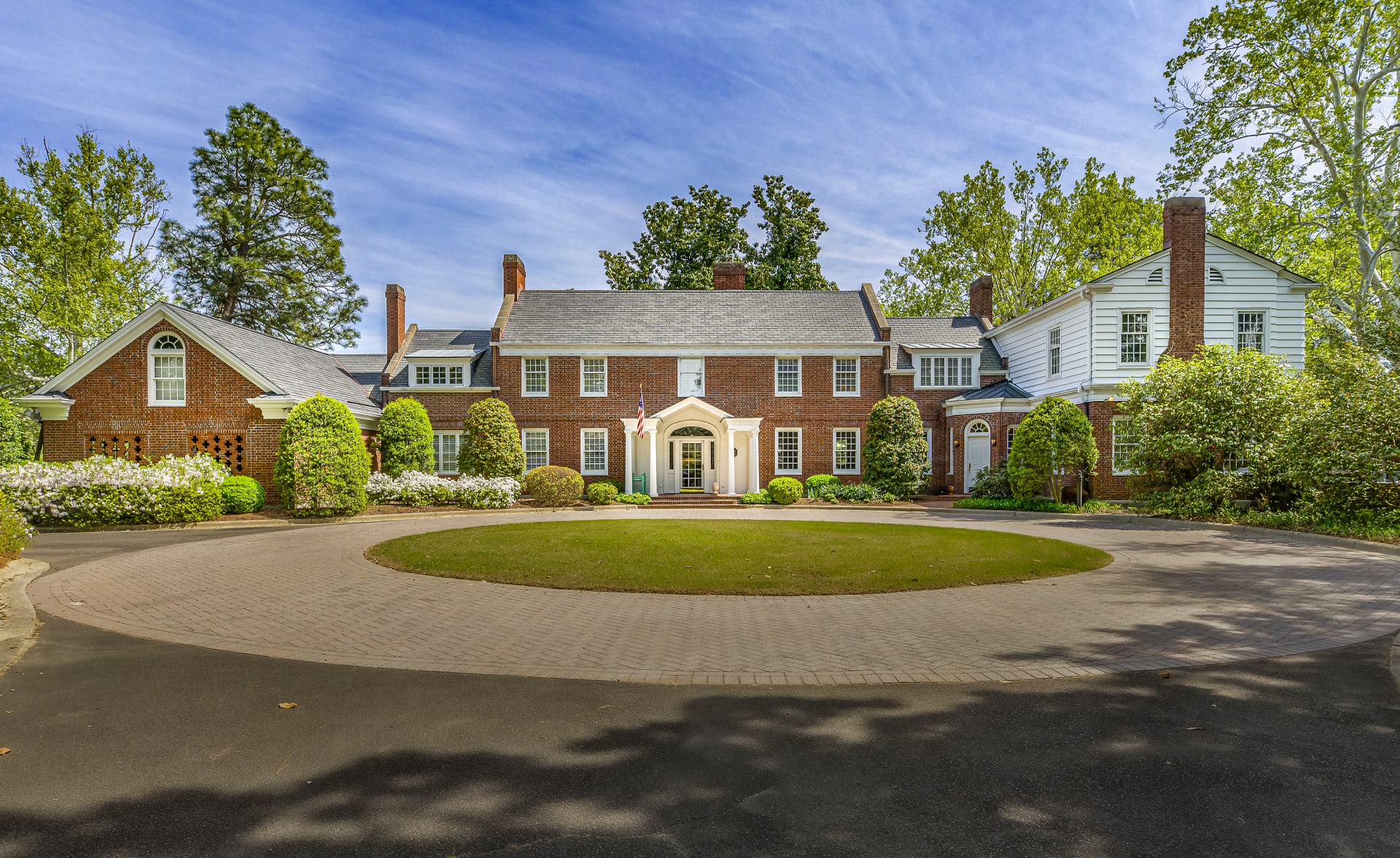
Neo-Georgian.  Walter Hines Page.  110 years of remarkable stewardship.
4Bedrooms
6Bathrooms
6,072Square Feet
4.15Acres
$4,250,000Exclusively Offered
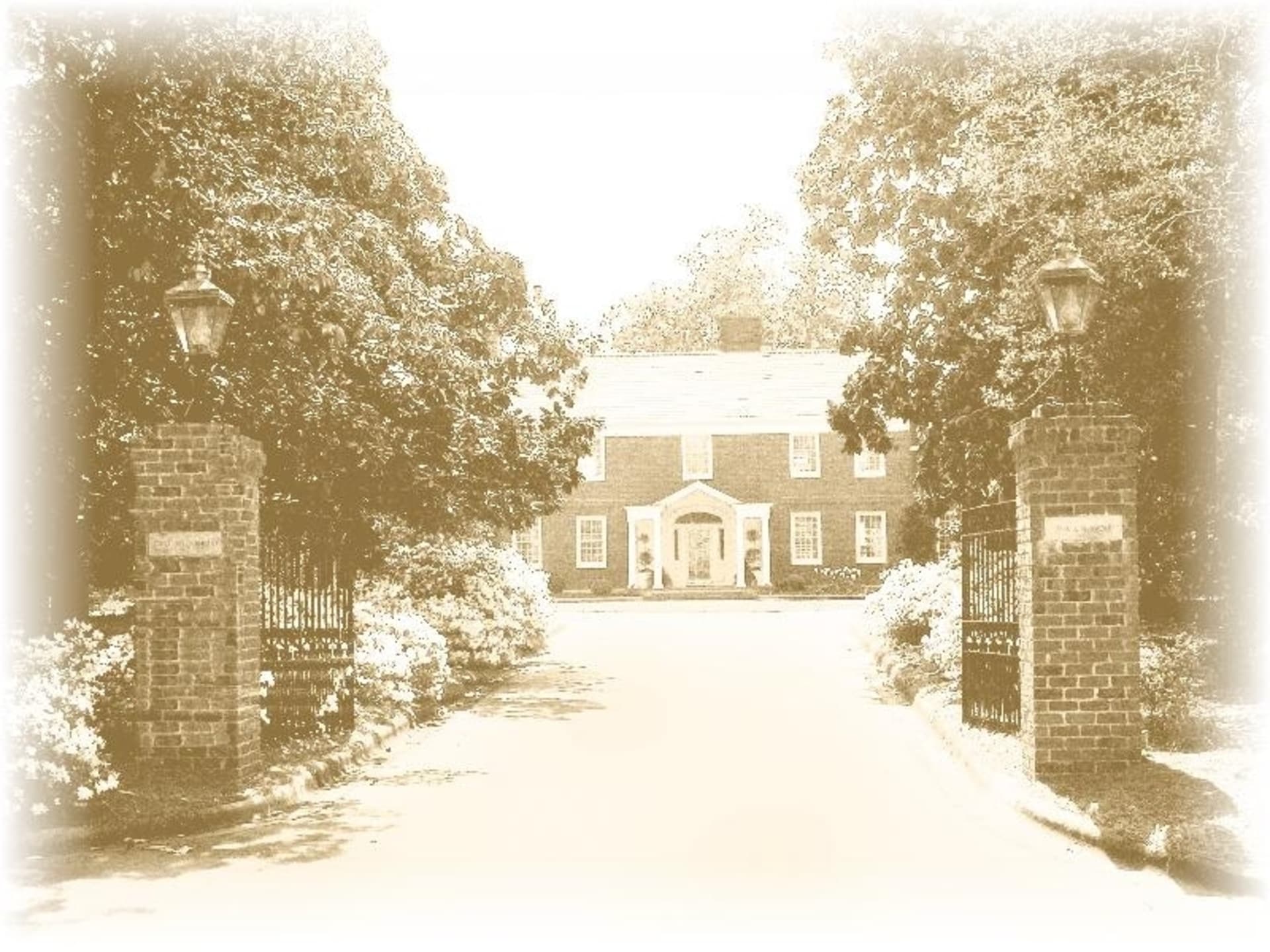
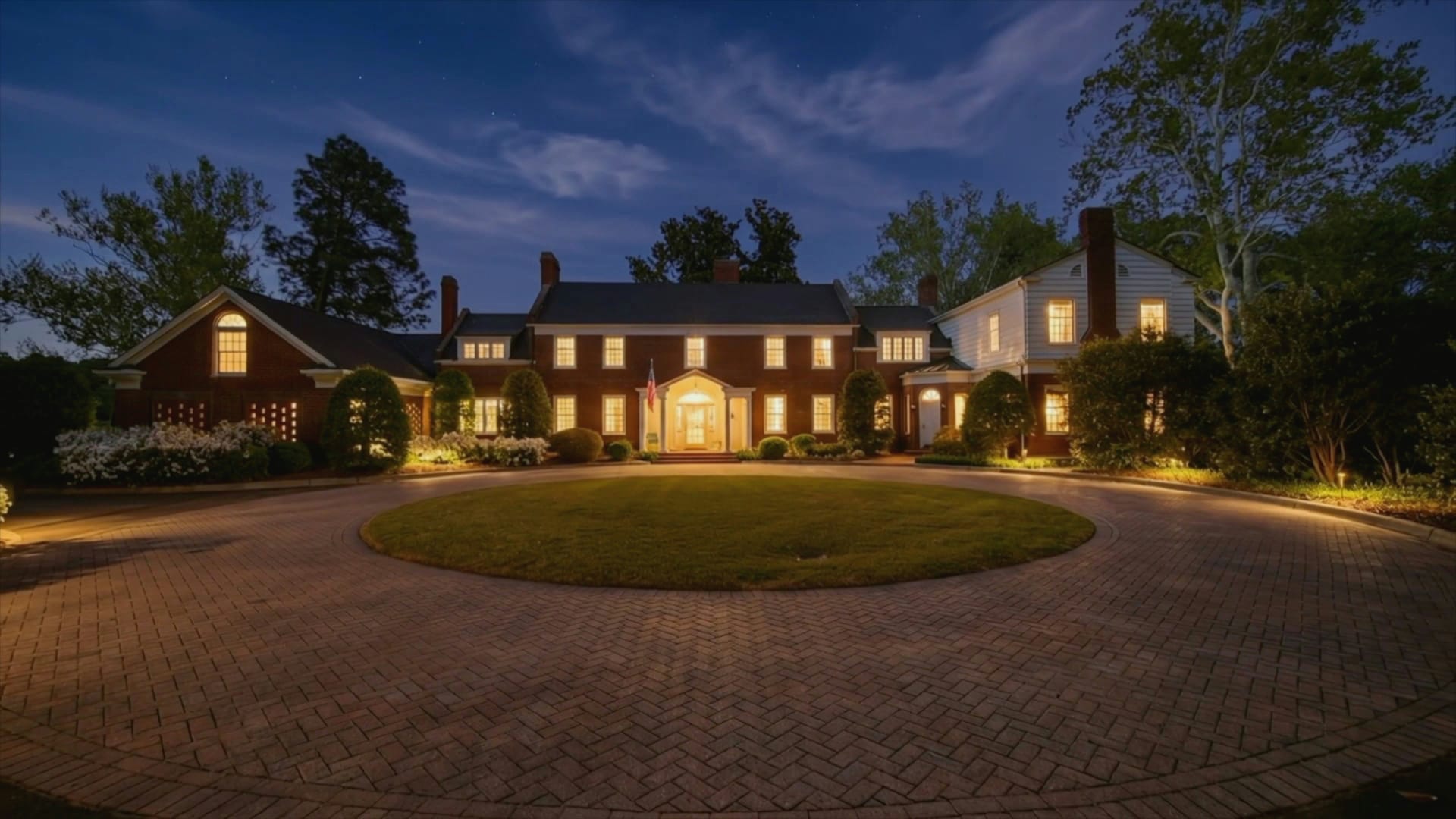
Garran Hill gate — twilight

Some houses hold history. This one shaped it.

200 Hollycrest Drive
The Man Who Built It

Walter Hines Page, Ambassador. Editor. Visionary. Built Garran Hill in 1916. And here it stays.

Born in Cary, North Carolina. Co-founder of Doubleday, Page & Co. Editor of The Atlantic Monthly. In 1913, Woodrow Wilson appointed him Ambassador to the Court of St. James — the most important diplomatic post in the world as Europe moved toward war.

From London, he wrote home constantly. Not about diplomacy. About the farm. When he wrote "the farm," he meant Garran Hill — all one thousand acres of it, purchased in February 1913, named by him, already under construction three thousand miles away.

His son Ralph supervised the construction. Leonard Tufts provided the craftsmen — the same men building Pinehurst. The house was completed in 1915–16.

He returned to America in December 1918. He was carried off the train at Aberdeen station. He died ten days later. He never spent a night at Garran Hill.

Walter Hines Page
⚠ PORTRAIT BLOCKED — artist attribution required before publish

[ Artist · Medium · Year · Provenance — PENDING RACHEL ]

Walter Hines Page  ·  1855–1918
The Life and Letters of Walter H. Page — Page 354
The farmthe farmthe farm
Vol. I  ·  Page 354  ·  1923
The Life and Letters of Walter H. Page — Page 356
Vol. I  ·  Page 356  ·  1923
"The farm — the farm — the farm —"
The Life and Letters of Walter H. Page  ·  Vol. I, P. 354  ·  1923
"The farm" was Garran Hill — one thousand acres in Moore County, purchased February 1913.
"Well, Frank, I did get here after all, didn't I?"
Walter Hines Page  ·  Aberdeen, NC  ·  December 1918
Pinehurst, North Carolina  ·  1916

Built by Leonard Tufts' own craftsmen.
The same men who built Pinehurst.

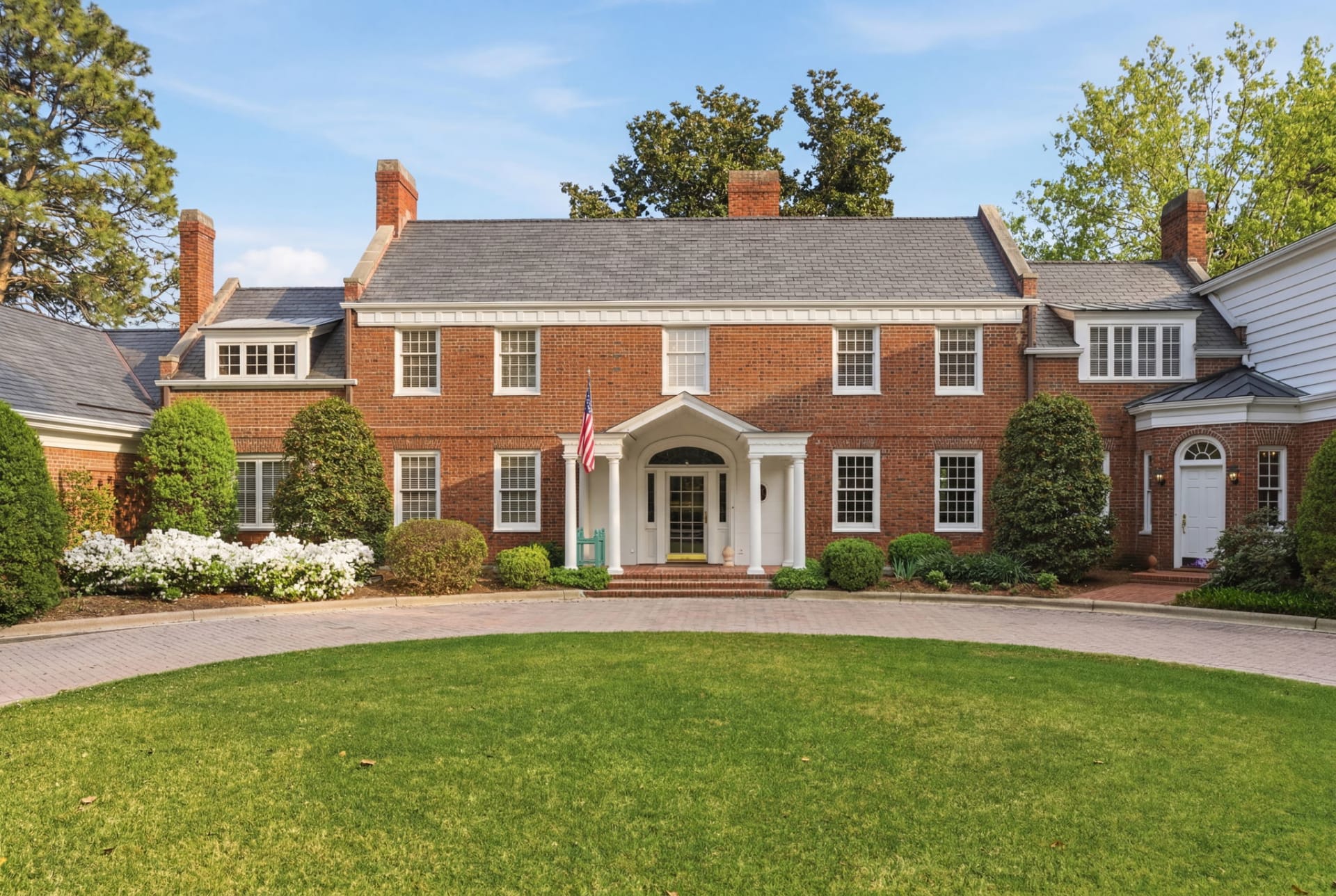
Neo-Georgian. Four columns. Full entablature. Built by the men who built Pinehurst — and built to the same standard, two miles away, in the same year.

These were Leonard Tufts' own craftsmen. The same hands that raised the Carolina Hotel, the Pinehurst clubhouse, the cottages along the village green. When Page commissioned the house from London — Ambassador to the Court of St. James, writing home about the farm while Europe moved toward war — he knew exactly whose hands would build it.

Three months were spent sourcing period-accurate brick for the portico alone. The proportions are correct because no one involved was willing to approximate.

Four families. One hundred and ten years.
He never made it back. They carried it forward.
That is not maintenance. That is devotion.

After Walter Hines Page, the house passed to Betty Dumaine — a woman of particular character who understood exactly what she had been given. She renamed it Hollycrest. She planted the rose garden. She kept foxhounds and peacocks on the grounds. She received guests of some consequence. She lived here fully and gave the land everything she had.

When she died in 1980, Garran Hill had been alive for sixty-four years. The name she chose stayed on the deed. The name Page chose stayed in the stone.

By 1999, the house was ready to be understood again. The current stewards commissioned architect Thomas O'Shea of Durham, North Carolina, to lead a complete interior restoration — three years of work, executed by general contractor Dennis Dunagan. Every window in the house was removed and rebuilt to the original proportions by Marvin. Every joint was opened, considered, and closed correctly. The plumbing, the electrical, the five-zone climate system — all of it replaced from the inside out, without touching what the house looked like from the outside in.

Fifteen architectural drawings document every decision O'Shea made. They survive. They transfer with the property.

"We fell in love with its character, its history, and the way it felt the moment we walked through the door."
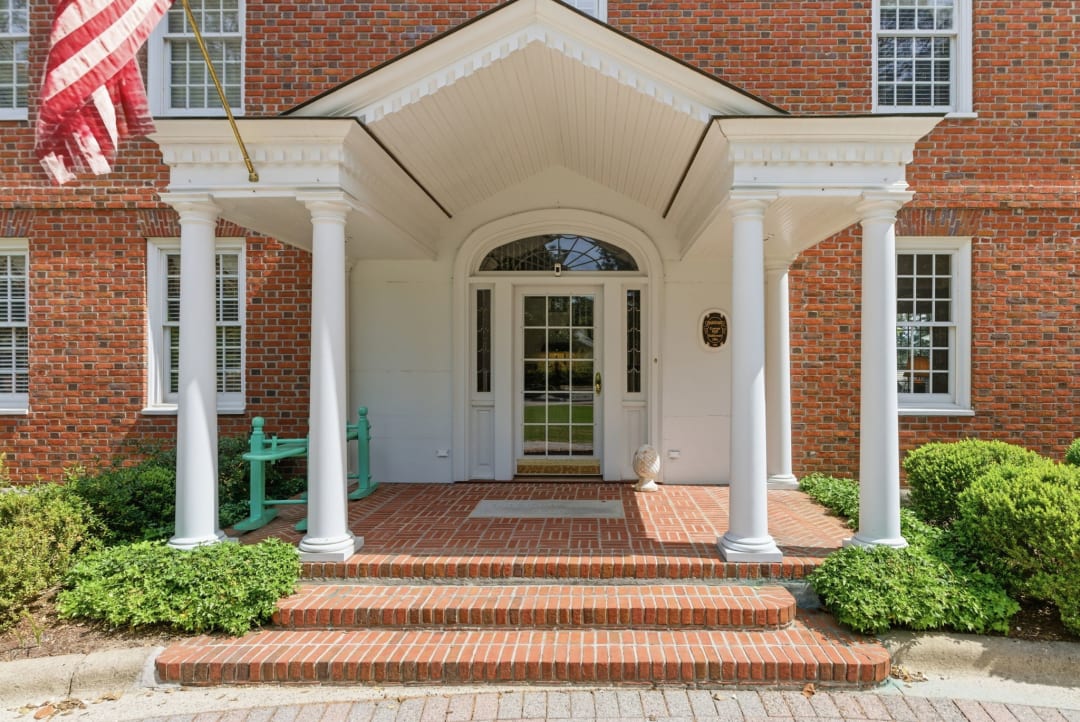
Garran Hill threshold — GARRAN HILL · 1916
The Threshold

The door has been
open since 1916.

The leaded glass sidelights and fanlight are original. The hardware was specified in 1916. It has not been replaced.

One detail makes everything clear: the inscription in the threshold — GARRAN HILL · 1916. He named it before it existed. The house has been answering to that name ever since.

The Living Room — Garran Hill
The Living Room — 1916

They made it bigger
so they could dance.

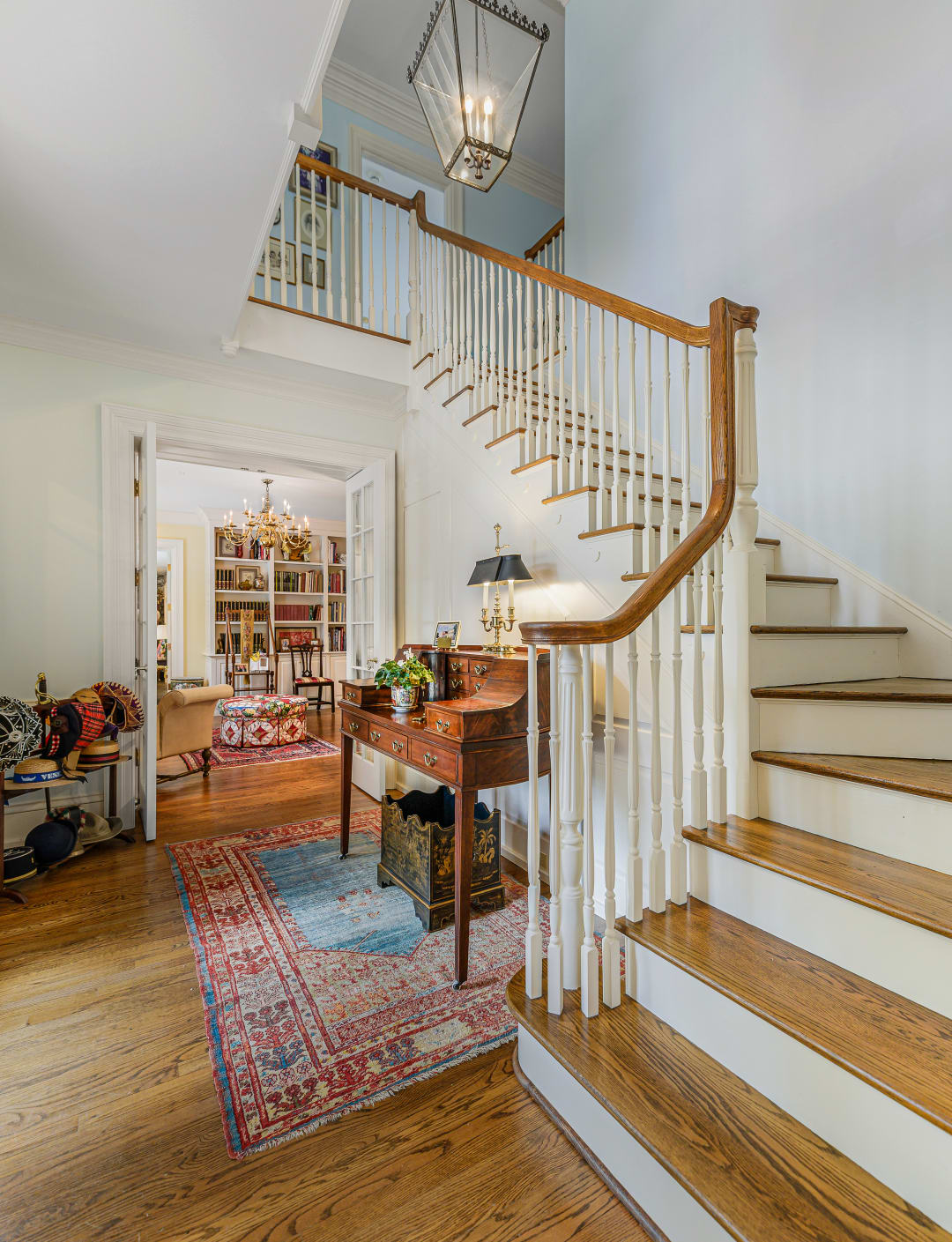
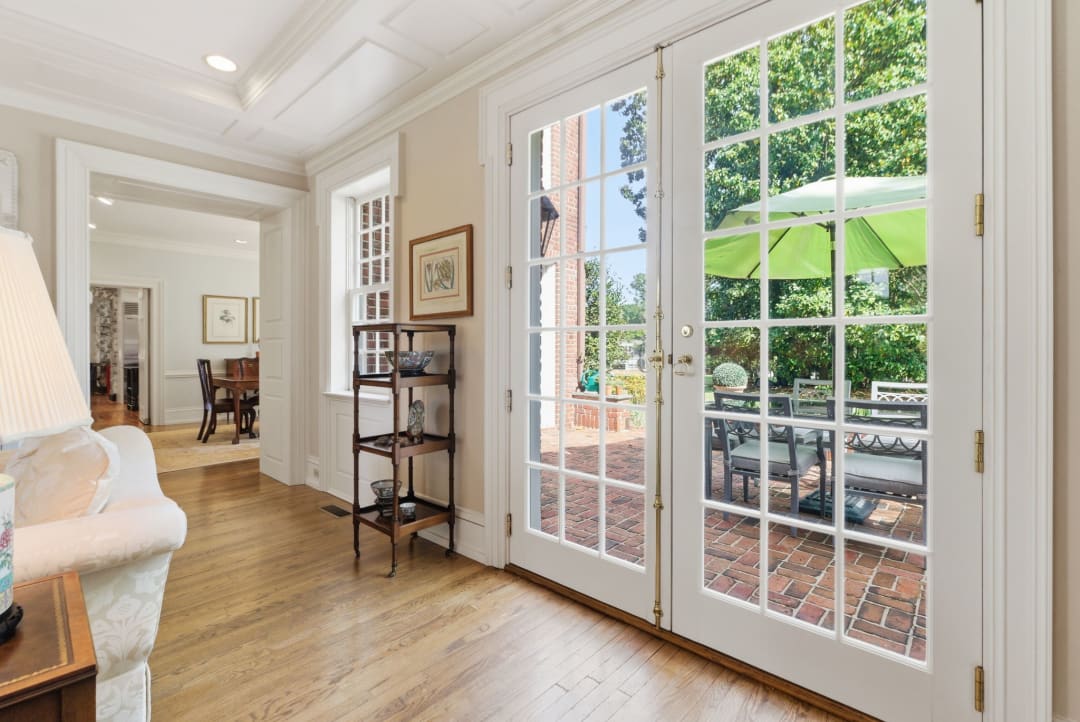
Coffered ceiling. Georgian panel molding in a grid. Oak floors lifted, repaired, relaid exactly as they were. French doors to the rear grounds. The central axis runs from the threshold straight through to the library — visible the instant the door opens.

Two full seating areas. Room enough to dance. Every fabric, every finish chosen because it belongs here. Not because it was available. Because it was right.

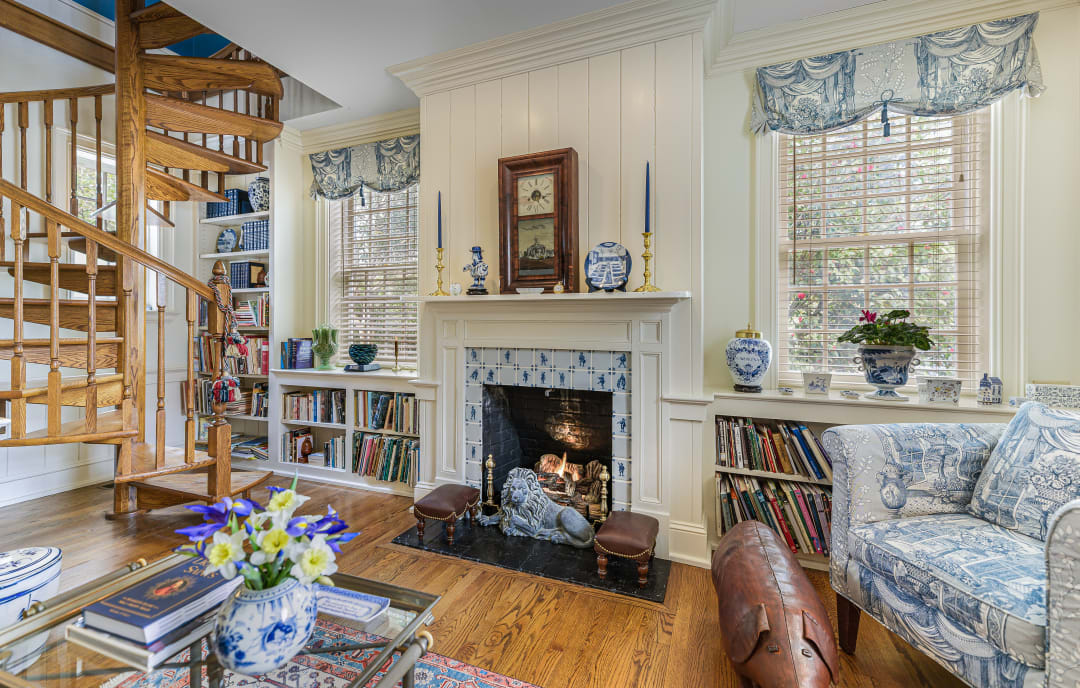
The Drawing Room — Delft fireplace
The Drawing Room

Fire going,
no one home yet.

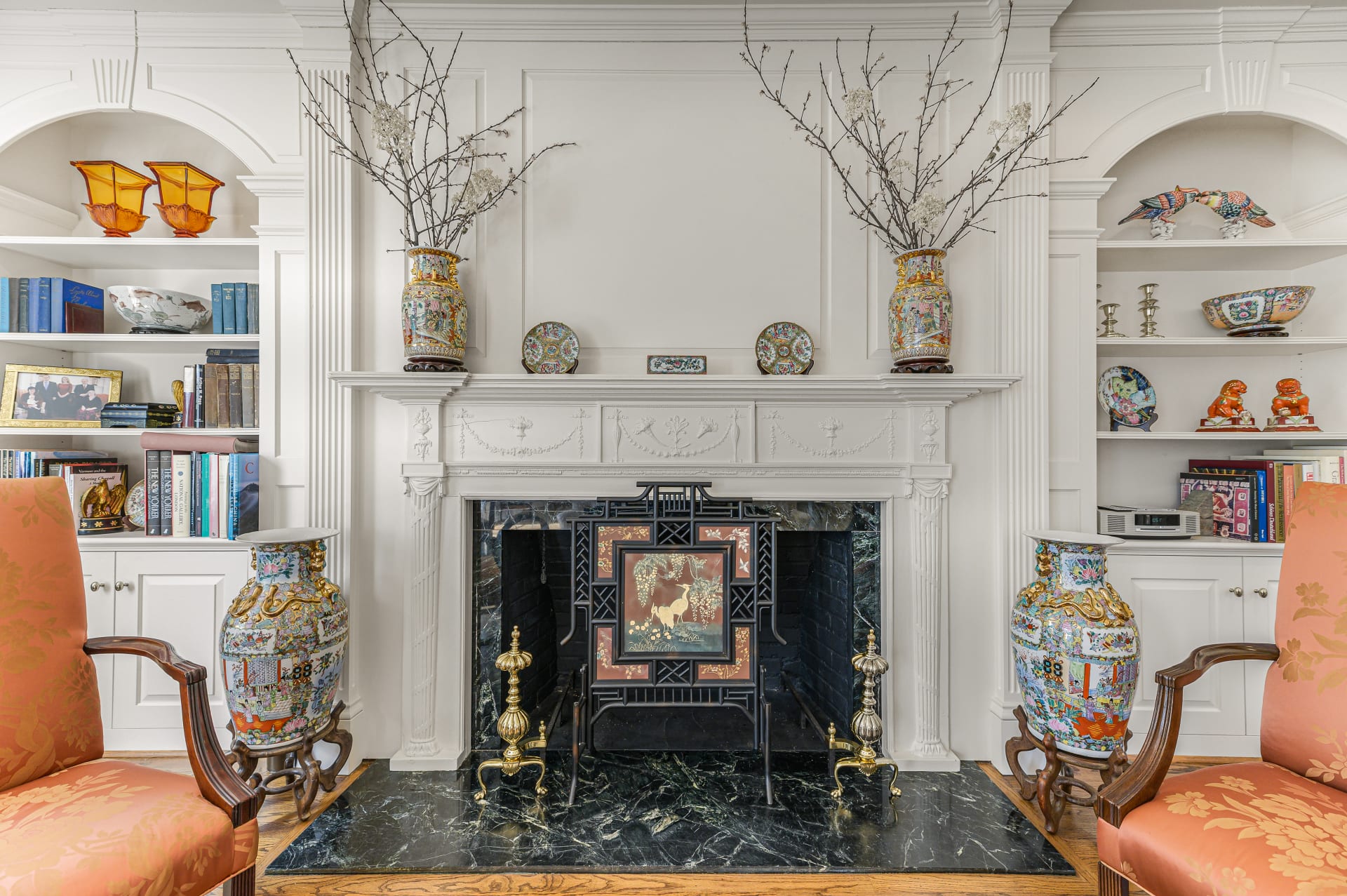
Original Georgian carved mantel. Delft tile surround — blue and white, hand-painted, original to the room. Lion andirons. Seven fireplaces in this house. This one is the seventh.

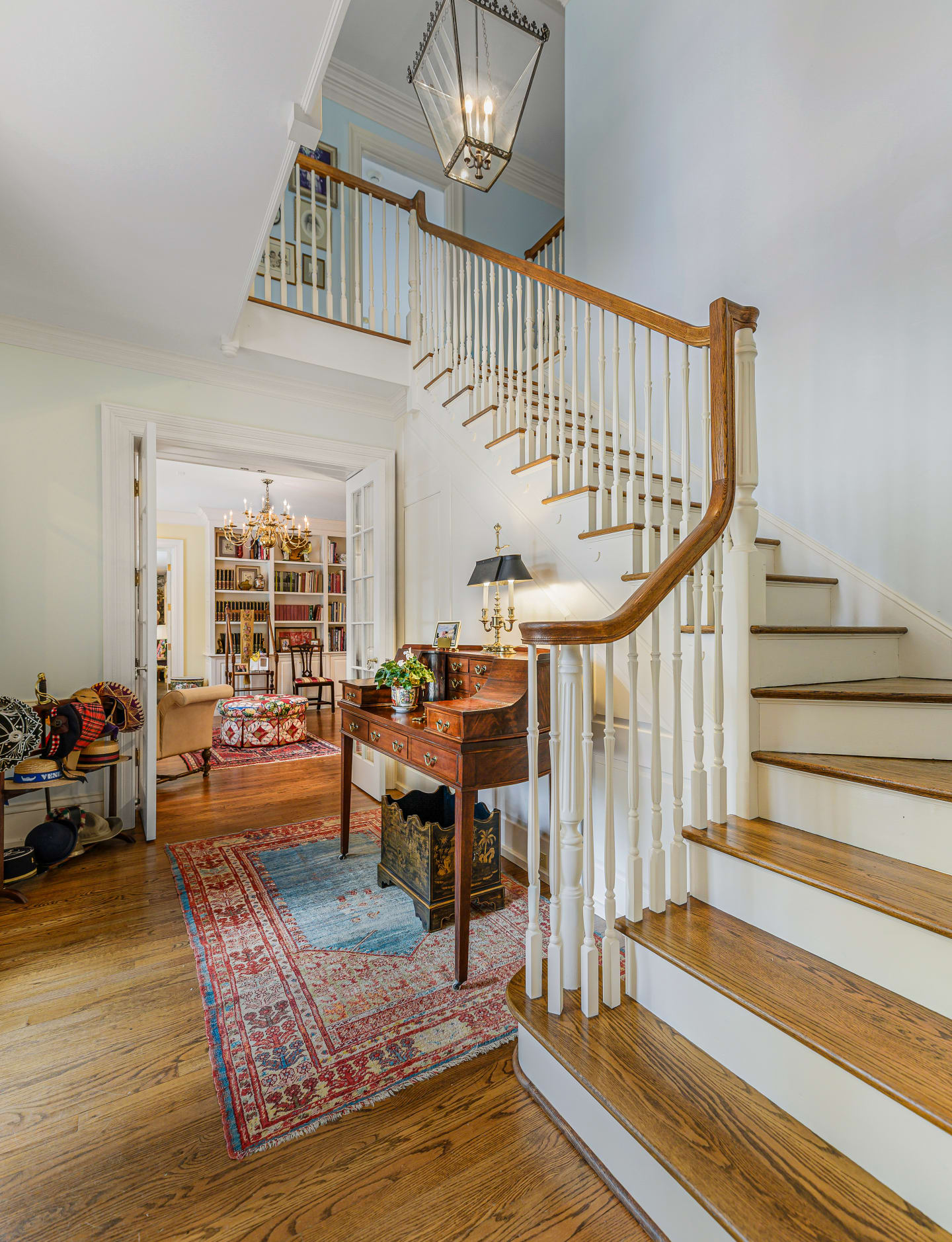
Persian rug over wide-plank oak. The room reads as a single thought — every object in the same language. A spiral staircase visible through the far doorway. The light arrives differently in the morning than in the afternoon. The room has always known this.

The Dining Room — Garran Hill
The Dining Room

Formal by proportion.
Intimate by firelight.

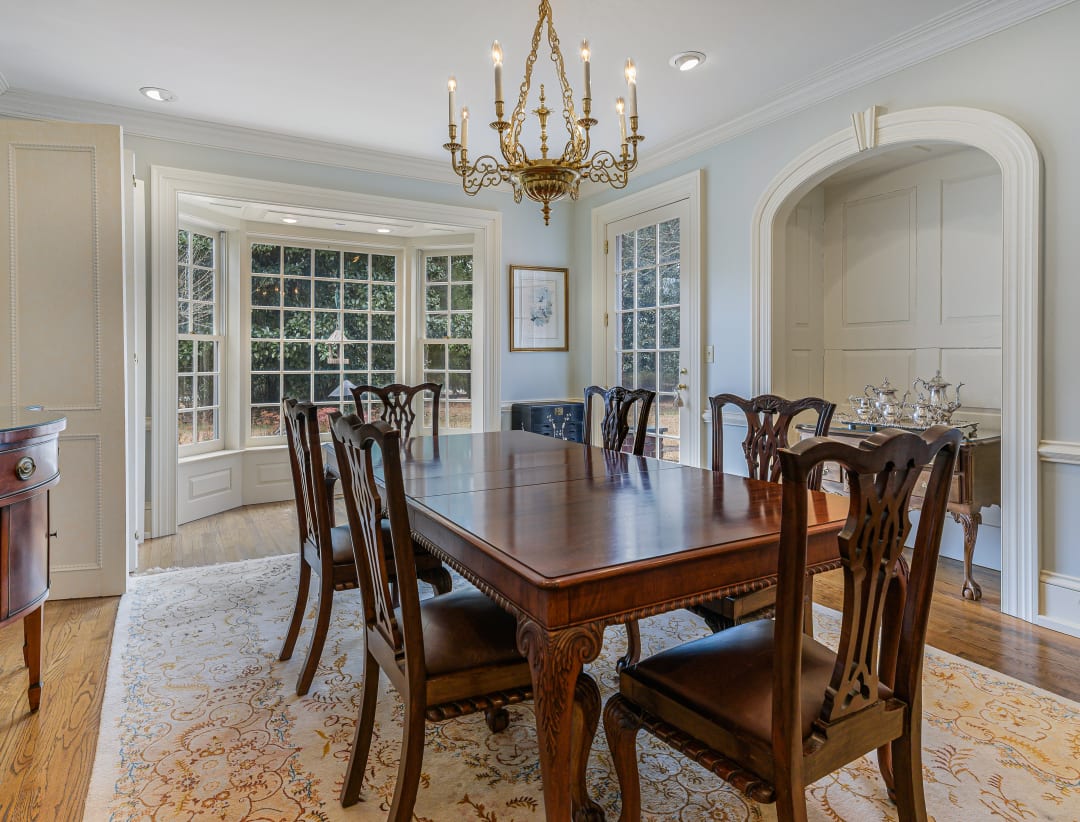
Bay window on the north wall — curved, floor to ceiling, nine-pane divided lights, looking directly onto the grounds. Brass and porcelain chandelier. Flanking the fireplace on both sides: arched shell alcoves, scalloped tops, built-in cabinet below — drawn on the restoration plans before a single piece of trim was cut.

Off the dining room, through its own arched opening: a paneled butler's niche with sideboard. Not a hallway. An event. A room that seats twelve without crowding.

In 1916, those were saplings. Now they are a forest.

The Kitchen — Garran Hill
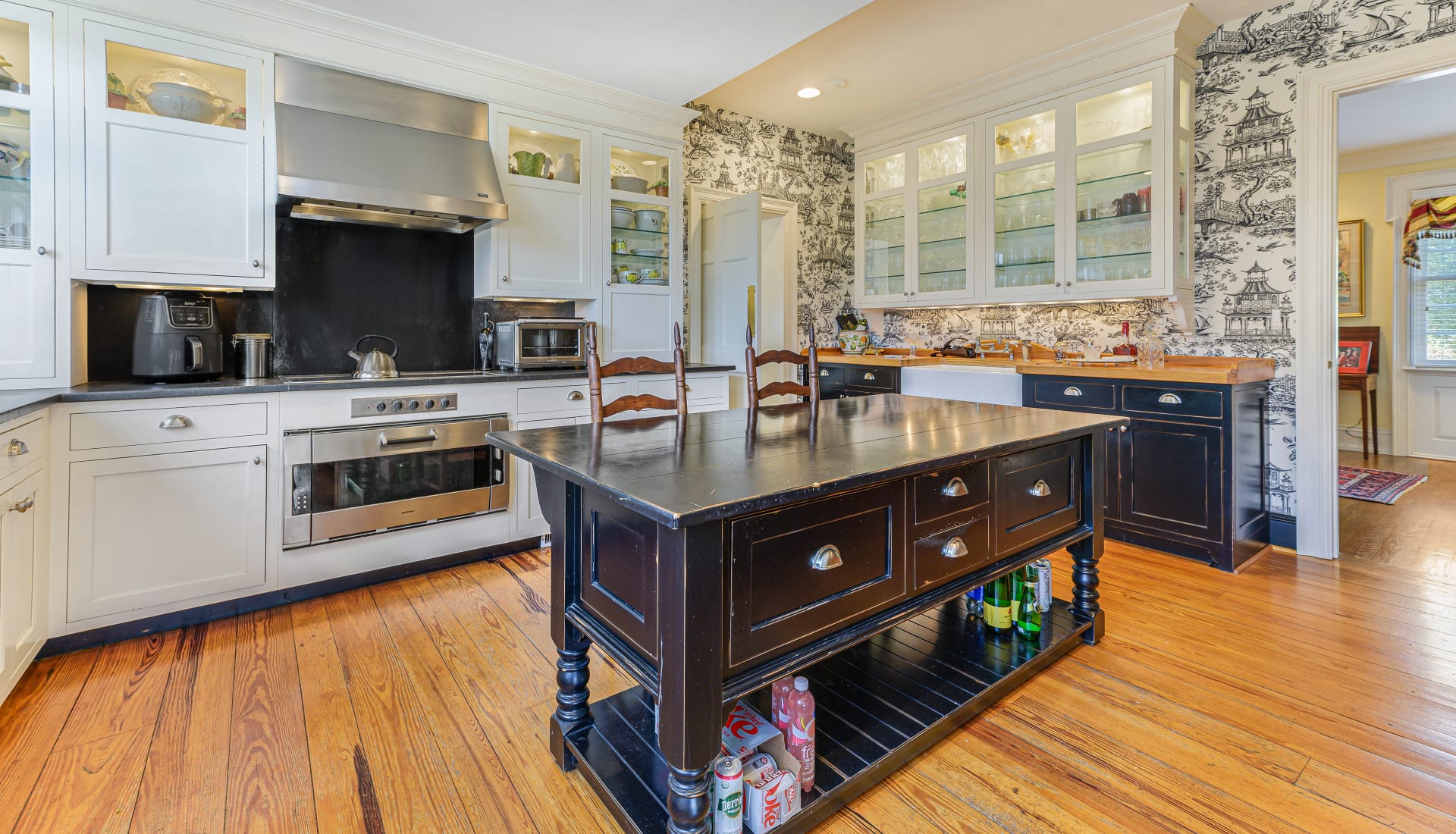
The Kitchen

White cabinetry.
Dark granite.
Island. Four windows.
Room to cook.

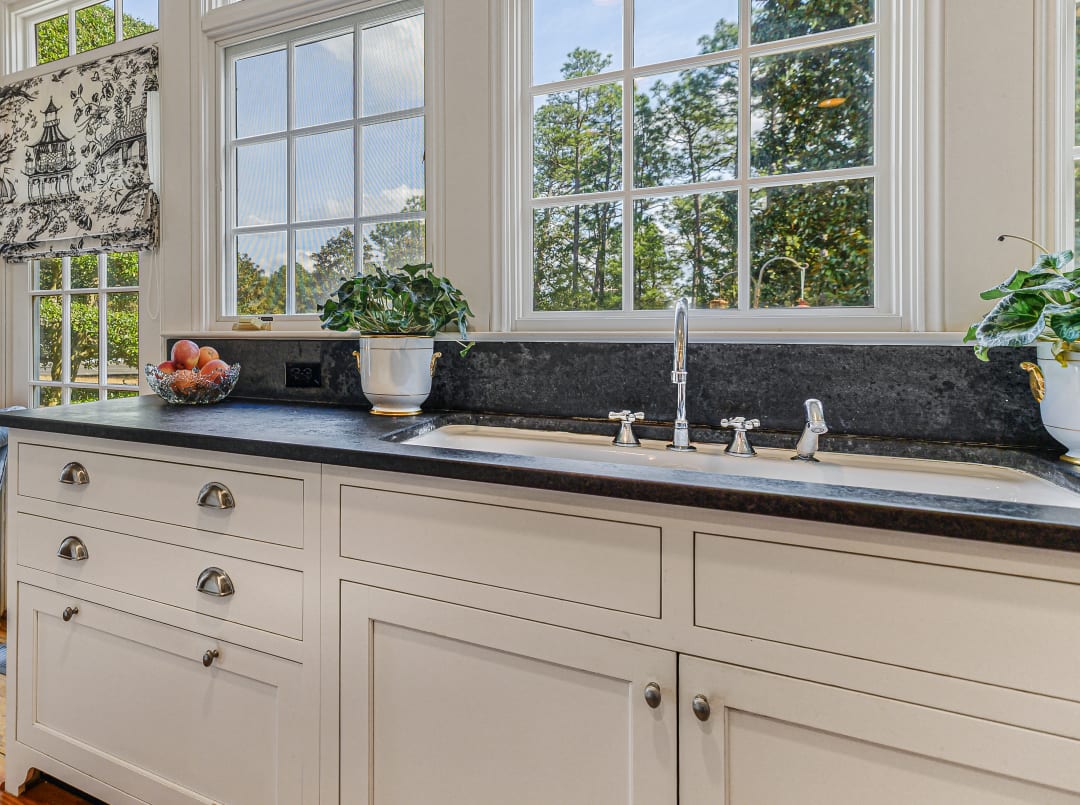
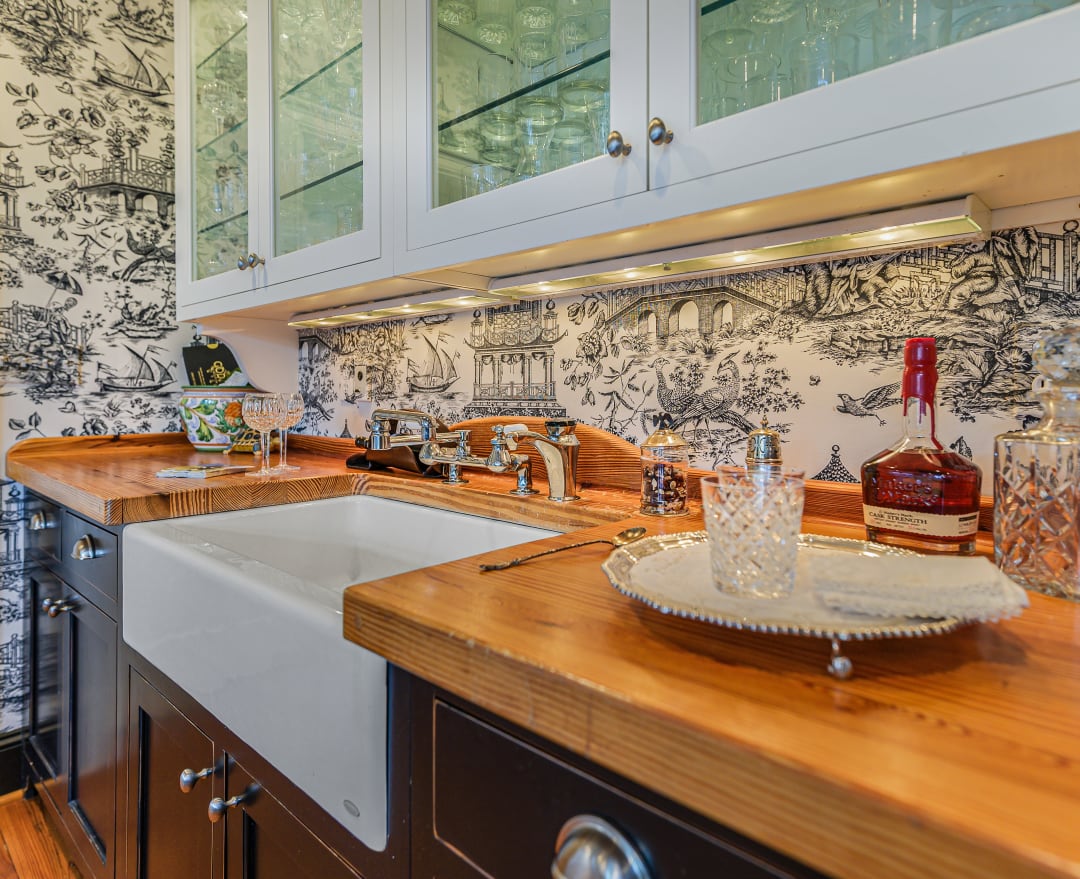
Built new in 2000. Reclaimed heart-pine floors. Custom cabinetry — white uppers with glass fronts, dark painted lowers. Farmhouse apron sink. Dark granite counters. A wall of divided-light windows facing the grounds.

The pantry door swings open — floor-to-ceiling shelving on every face, two full towers, built for a house that is actually used. Every morning at 6:30, the deer come through.

Kitchen island Kitchen sink wall Kitchen detail Kitchen range
The Library — Garran Hill
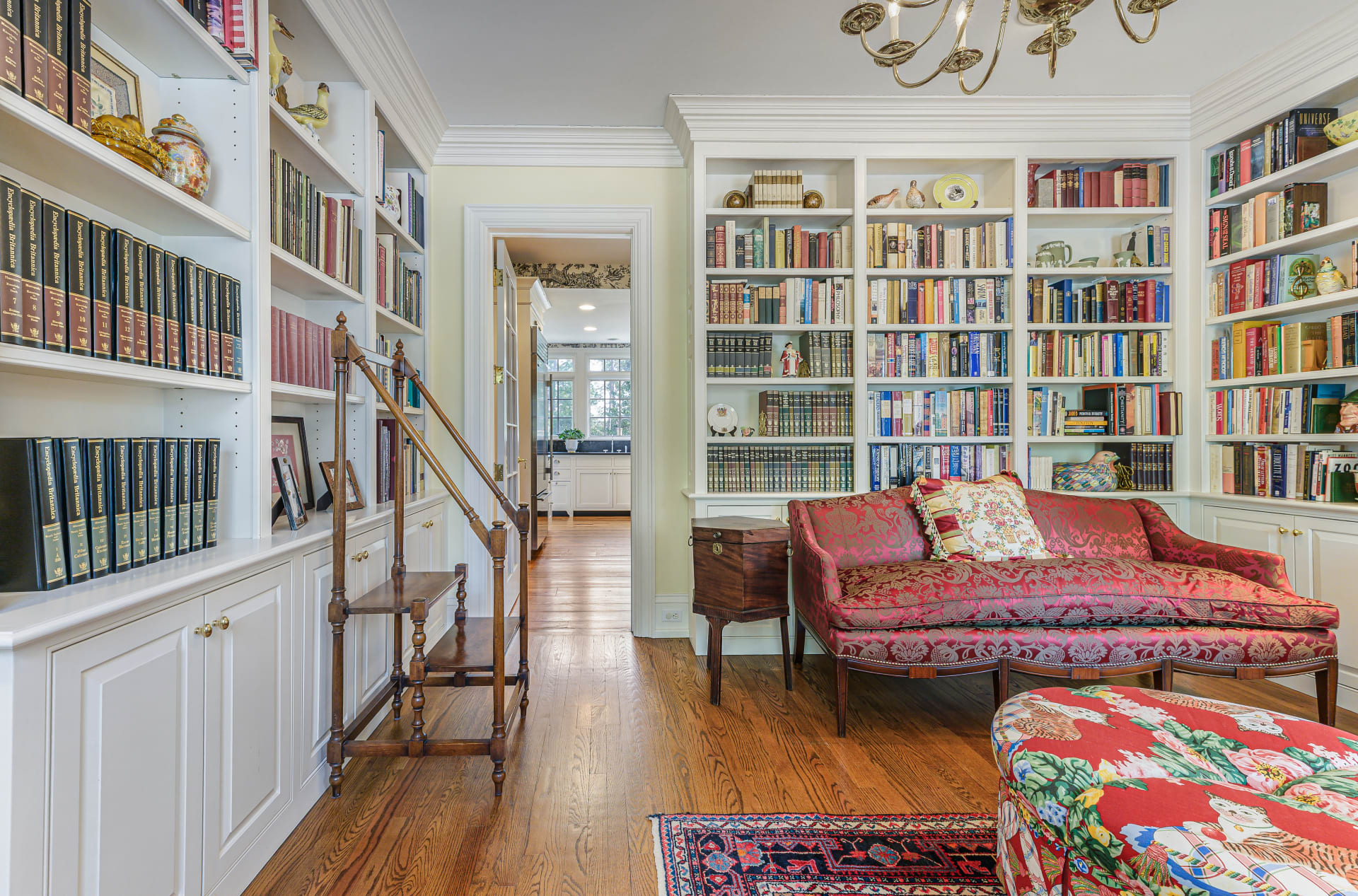
The Library

Designed in 2000.
Built to last
another century.

Dead center of the first floor — positioned that way in the 2000 plans. Built-in shelving on three walls, floor to ceiling. Rolling ladder. French doors to the rear grounds. Brass chandelier. O'Shea designed this room to the same standard as the 1916 house it joined. When you stand in it, you cannot find the seam.

It does not feel added. It feels inevitable.

Not original.
Deliberate.

Thomas O'Shea, Architect  ·  Durham, NC  ·  January 2000

Primary Suite — Garran Hill
The Primary Suite

The whole floor
belongs to it.

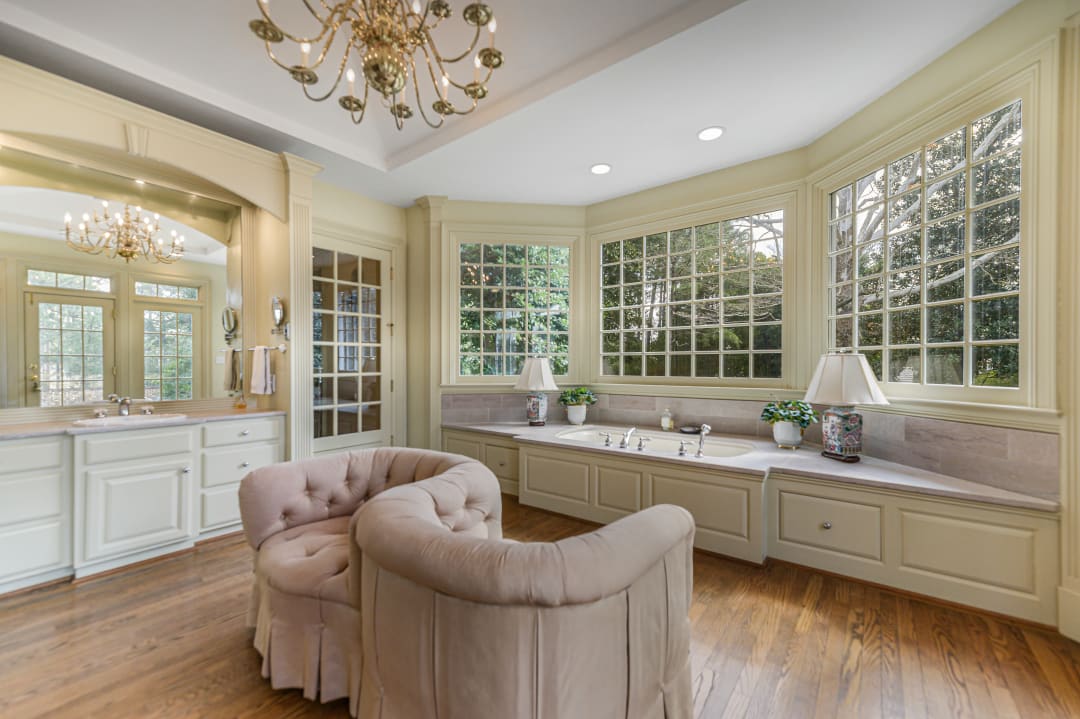
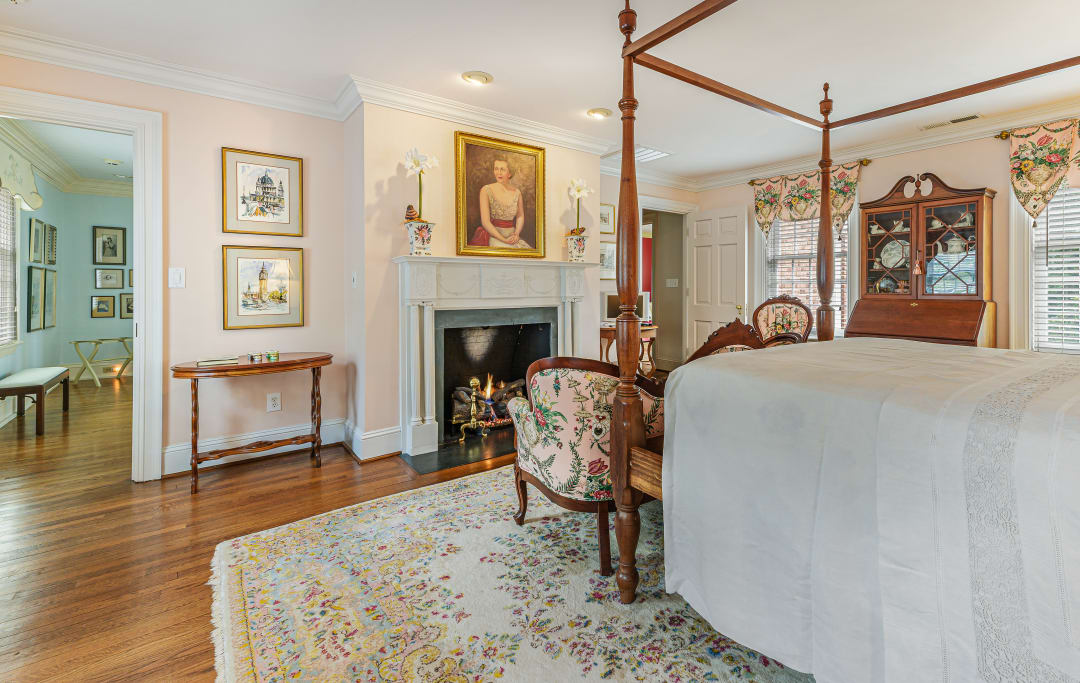
The primary suite occupies the entire east wing of the second floor. Sitting room. Dressing room. A primary bath finished in marble. Every window faces the grounds.

The closet is behind a wall that looks like a wall. The bathroom floor is marble. The hardware is original. Nothing was approximated.

Yellow Bedroom — Garran Hill
The Guest Rooms

The Rose Suite.
The Yellow Suite.
The Nursery.

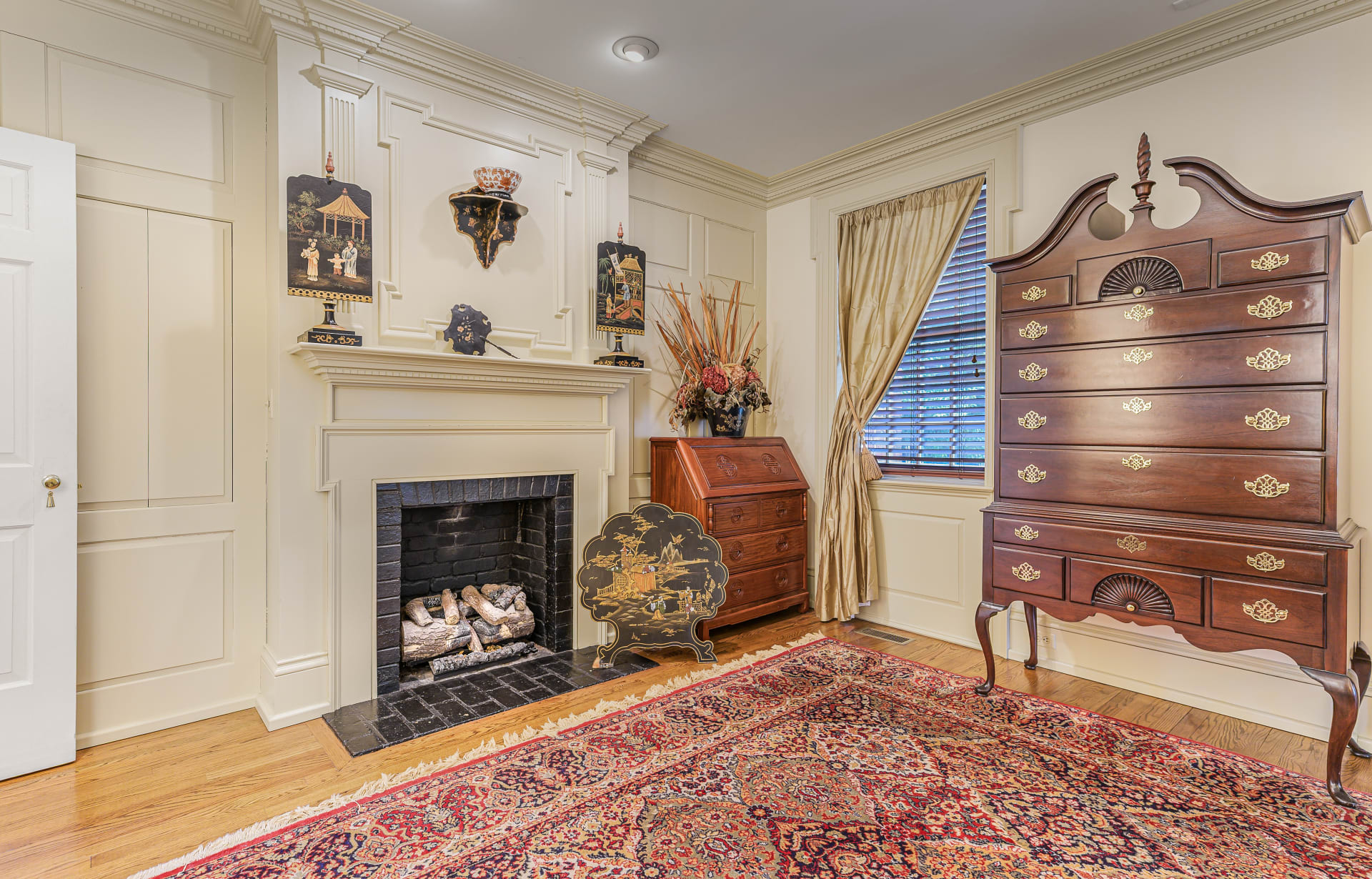
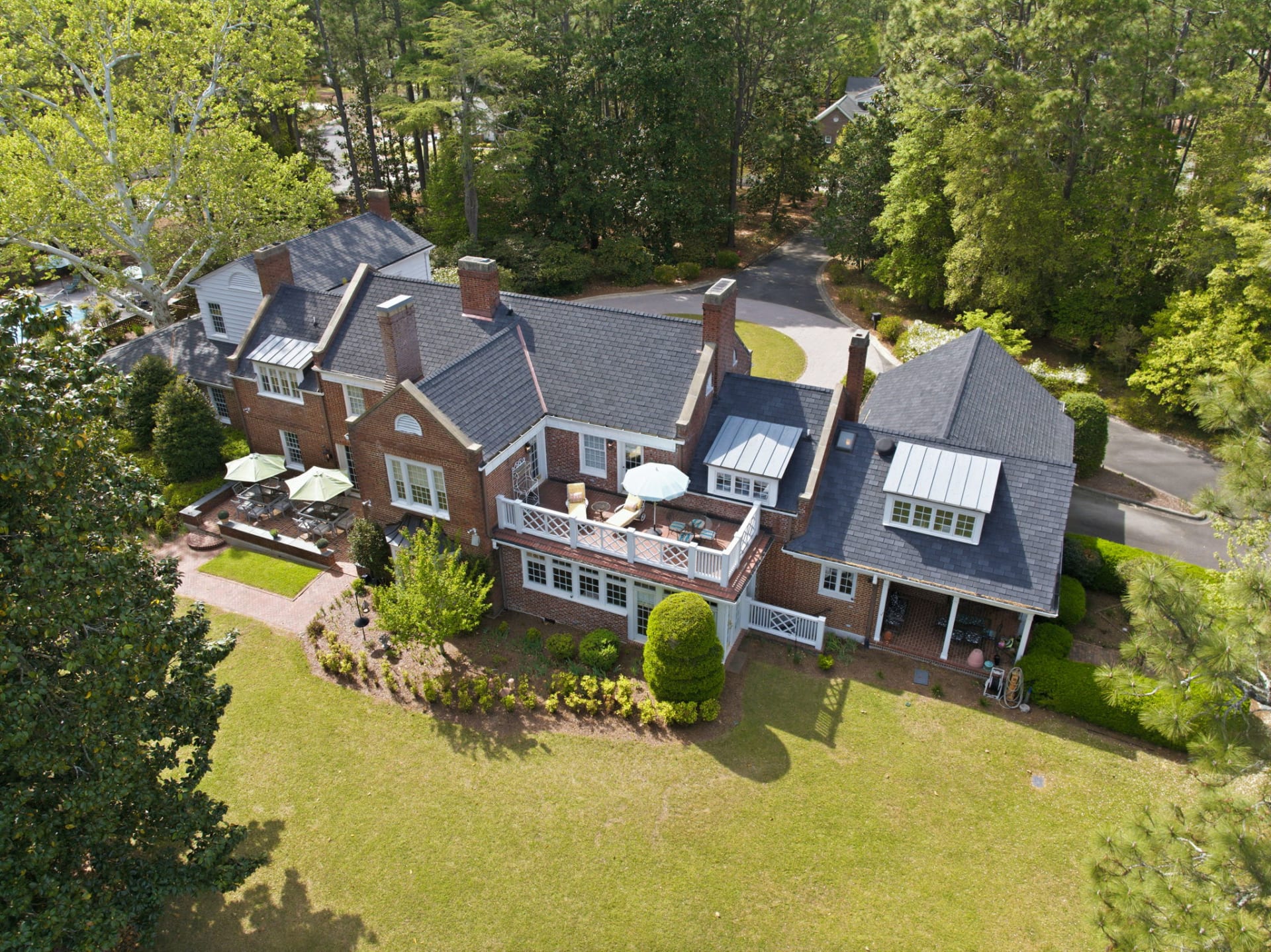
Each with original proportions, original fireplaces, original hardware. Closets behind walls that look like walls. The Yellow Suite and the Nursery open onto a shared balcony above the kitchen — lattice railing drawn to spec, not chosen from a catalog.

Nothing was combined. Nothing was converted. Three staircases. The main stair turns the same curve it has turned since 1916.

Rose Garden — Garran Hill
The Grounds

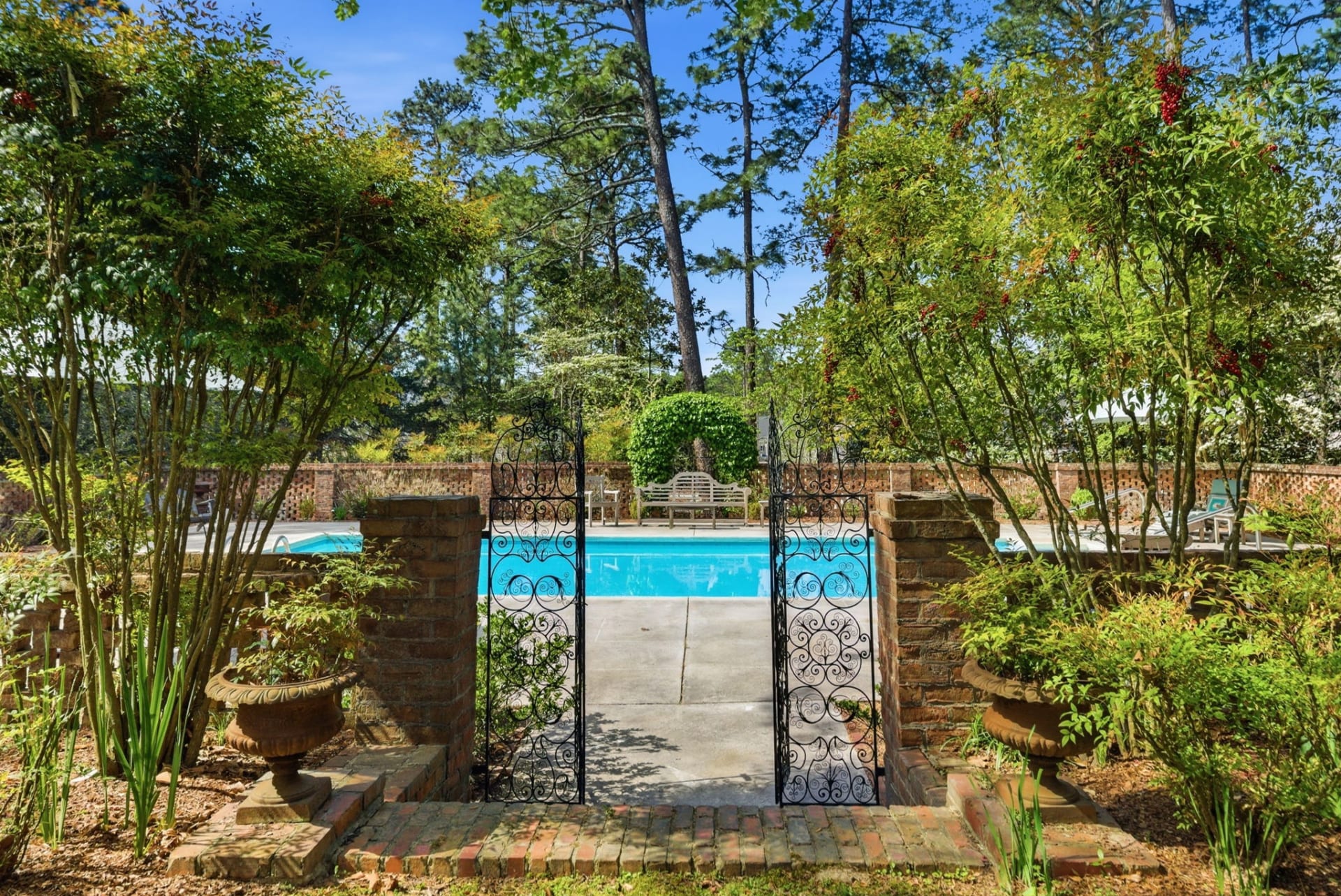
The rose garden runs
the full length
of the pool wall.

The rose garden, the pool walk, the camellias along the pebble path — Betty Dumaine planted all of it. She kept foxhounds and peacocks. Four families have called Garran Hill home. Each one added something. Nothing was taken away.

The world outside these gates does not exist here.
Pool arch and roses White roses Pool — 20x40 salt water

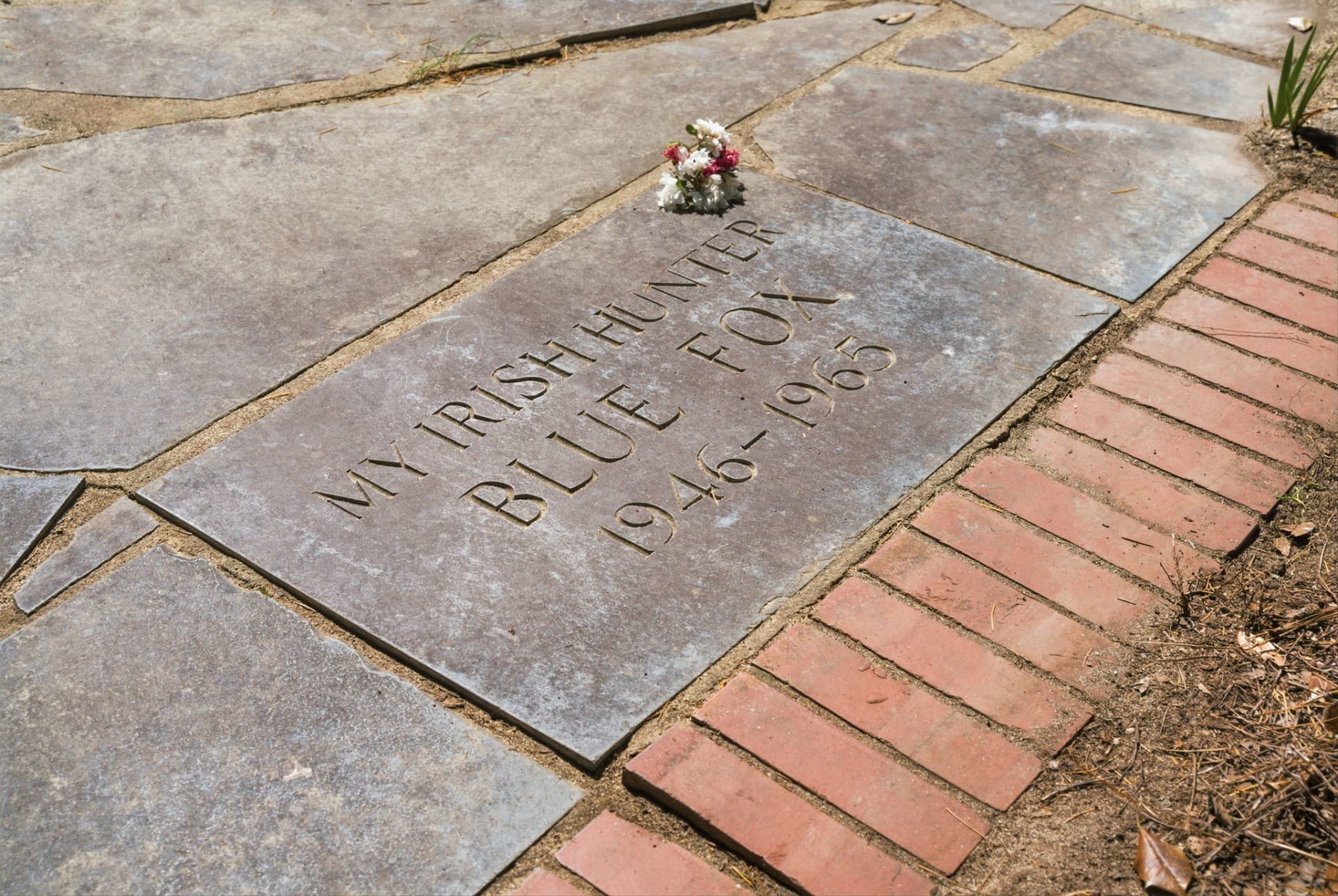
Someone still puts flowers there.

Built to Last — Systems & Infrastructure
Pool

20×40 salt water. Converted 2022. Separate pool house. Parking for 6 at the pool lot.

Fireplaces

Seven total. Six with propane gas logs. Original carved mantels throughout.

Windows

Every window in the house replaced 1999–2001. Custom Marvin. Original proportions preserved. You would not know.

Hot Water

Three heaters — 80-gallon primary + two 40-gallon units. Capacity for a house in continuous, serious use.

Irrigation

28+ zones. Fed by a 130-foot private well. The grounds are managed, not maintained.

Drawings

Fifteen original architectural drawings by Thomas O'Shea. They transfer with the property.

Parking

12+ cars northeast lot. Additional 6 at the pool lot. Fully paved and lit.

Security

Hard-wired remote monitoring. Greensboro-based service. All cameras.

Basement

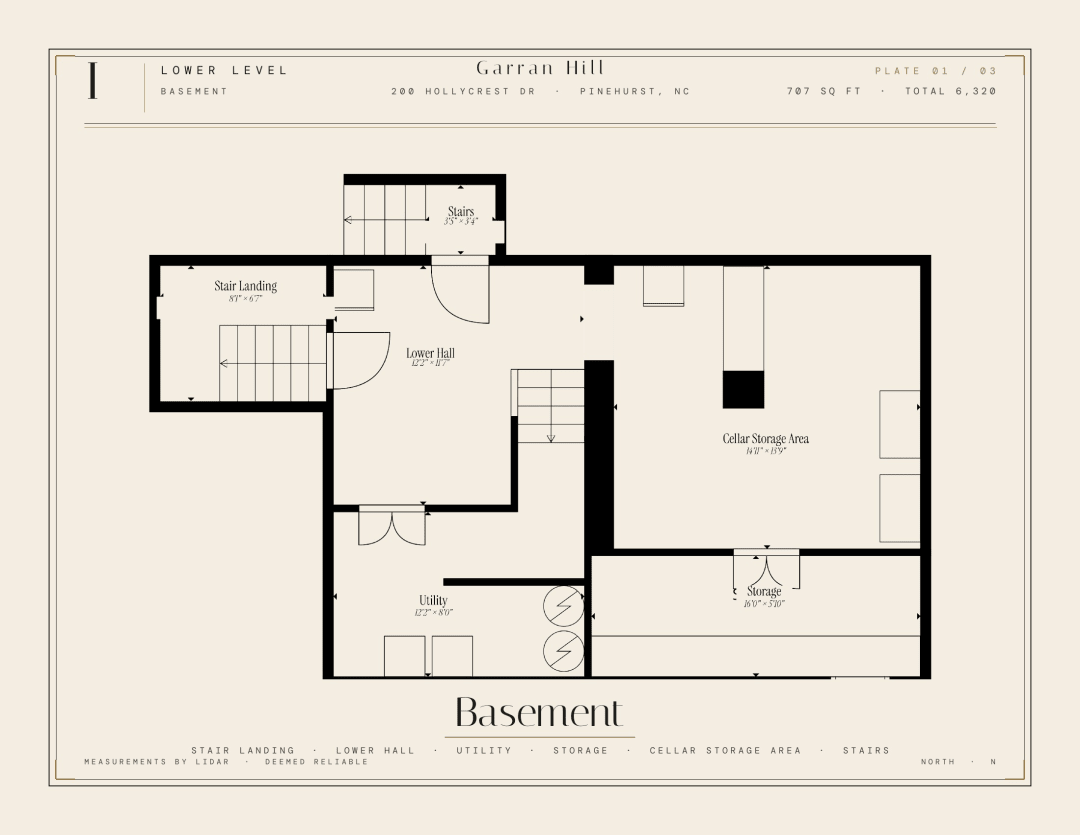
Stone-walled. Four rooms. Climate-controlled. Wine rack. The original kitchen was here. Now it is storage worthy of the house.

Garran Hill — 200 Hollycrest Drive
Garran Hill Crest
Garran Hill
Garran Hill is ready.
It is offered now for the first time.
Est. 1916  ·  Pinehurst, NC  ·  $4,250,000
Request Private Showing
The world outside these gates does not exist here.
Request Private Showing
200 Hollycrest Drive  ·  Pinehurst, North Carolina
Exclusively Offered at $4,250,000
All inquiries held in strict confidence